
Research chemical supply reviews are structured evaluations that measure a vendor's purity documentation, shipping reliability, and batch-level traceability to protect experimental integrity. For researchers who depend on consistent, high-grade materials, reading these reviews correctly is as critical as the experiment itself. A supplier with a polished website but generic Certificates of Analysis (COAs) can quietly destroy months of data. This guide breaks down exactly what to look for, what to ignore, and how to separate vendors worth trusting from those worth avoiding.
1. What key criteria should researchers look for in supply reviews?
The most reliable research chemical supply reviews focus on documentation quality first, not price. A batch-specific COA that includes raw HPLC chromatograms and mass spectrometry data tells you what was actually shipped. A generic COA tells you almost nothing. Batch-specific COAs are the single most important indicator of a supplier's commitment to traceability.
- Purity scores: Look for vendors whose lab results consistently meet or exceed label claims. Mid-tier suppliers often ship compounds averaging 94%–97.5% purity despite advertising 99%.
- Cold-chain shipping: Temperature-sensitive compounds degrade in transit without proper cold-chain protocols. Top suppliers include this by default; budget vendors charge extra.
- Documentation transparency: COAs must be lot-matchable. If you cannot verify the certificate against the specific batch you received, it is functionally worthless.
- Shipping logistics: Domestic fulfillment typically delivers in 3–5 business days. International orders average 18–21 days and carry customs risk.
- Customer service quality: Reviews that describe proactive communication signal a vendor who handles problems before they escalate.
Pro Tip: When reading reviews, filter specifically for researchers who ordered the same compound class you need. A vendor excellent for stable peptides may be unreliable for temperature-sensitive analogs.
2. Top features of reliable research chemical suppliers

Top-rated chemical suppliers share a specific set of operational features that show up consistently in credible reviews. These features are not marketing claims. They are verifiable through documentation and third-party testing.
Batch-specific COAs with chromatograms. A COA that includes a downloadable HPLC chromatogram and mass spec data is the baseline for any serious supplier. Generic COAs are red flags regardless of how well-known the brand is. Researchers running formal documentation workflows cannot substitute generic certificates for lot-specific records.
Cold-chain shipping by default. Cold-chain protocols maintain compound integrity during summer heat or winter cold. Cold-chain integrity and batch COA authenticity are the two hardest things to fake in blinded testing. Suppliers who include cold-chain shipping as standard, rather than an add-on, signal that they understand compound stability.
Independent third-party lab validation. Vendor-provided COAs are a starting point, not a finish line. Independent blinded lab testing remains the gold standard for verifying purity claims. Researchers who budget for independent analytical testing as part of procurement protect their data from vendor-side errors.
AI-assisted protocol tools. Some suppliers now integrate platform tools that support dosing calculations and reconstitution guidance. CDMO integration and AI tools for protocol matching are features researchers increasingly value in supplier evaluations. These services reduce the time spent on pre-experiment setup.
Transparent pricing tiers. Top-tier vendors typically charge 10%–25% more than budget options. That premium reflects verified documentation, cold-chain logistics, and consistent purity. The cost difference is real, but so is the downstream benefit.
3. How to interpret and weigh customer reviews in research chemical procurement
Not all reviews carry equal weight. A one-time buyer commenting on packaging tells you less than a researcher who ordered the same compound across five batches and tested each one independently. When reading vendor reviews, prioritize accounts that describe specific documentation details, shipping conditions, and purity outcomes.
Recognize the types of reviews that matter most:
- Verified purchase reviews that reference specific compound names and batch numbers
- Reports that include independent lab results alongside vendor COA comparisons
- Accounts from researchers who placed volume orders and can speak to consistency across batches
- Reviews that describe how the vendor handled a problem, not just whether one occurred
Red flags to watch for:
- Praise that focuses only on price and ignores documentation
- Reviews that cannot confirm whether the COA was batch-specific or generic
- Complaints about delayed shipments with no follow-up communication from the vendor
- Patterns of templated customer service responses across multiple reviewers
Vendor communication is a critical reliability indicator. Large volume suppliers score around 6/10 in communication quality, with templated responses being common. That score matters because a vendor who cannot communicate clearly during a routine order will be worse during a problem.
Pro Tip: Cross-reference community forum threads with formal review platforms. Researchers on specialized forums often share raw data and independent test results that do not appear in standard review formats.
Volume ordering feedback is especially valuable. A researcher who has ordered the same compound quarterly for a year can tell you whether purity is consistent across batches, whether cold-chain packaging holds up in summer, and whether the vendor's communication improves or degrades at scale.
4. Comparison of supply chain logistics for research chemical deliveries
Shipping logistics directly affect compound quality, not just delivery timing. A peptide that arrives degraded because of inadequate cold-chain handling is useless regardless of its original purity score. Researchers evaluating best research chemical suppliers must factor logistics into their quality assessment, not treat it as a separate concern.
| Logistics Factor | Domestic warehouse | Direct from origin |
|---|---|---|
| Typical lead time | 3–5 business days | 18–21 days |
| Cold-chain reliability | Consistently maintained | Variable by carrier |
| Customs risk | None | Moderate to high |
| Unit cost | 20%–30% higher | Lower base price |
| Documentation speed | Immediate access | Delayed or incomplete |
Domestic warehouse fulfillment offers reliability at a 20%–30% higher unit cost compared to direct-from-origin procurement. That cost difference is the price of predictability. For time-sensitive research, a delayed or seized international shipment costs far more than the unit price difference.
International procurement reduces upfront costs but introduces customs risk and longer transit windows. Direct-from-origin procurement offers lower prices but longer lead times and customs exposure. Researchers running experiments on fixed timelines should treat international sourcing as a secondary option, not a primary supply chain.
Cold-chain shipping matters most for temperature-sensitive compounds during extreme weather months. A vendor that ships cold-chain by default removes one major variable from your quality equation. Budget vendors that charge extra for cold-chain effectively pass the degradation risk to you.
5. Understanding purity premiums and their research value
The purity premium is the cost difference between a top-tier supplier and a budget option. That gap typically runs 10%–25% per unit. Researchers who focus only on unit price miss the full cost picture.
Paying a purity premium reduces downstream experimental inconsistencies and data reconciliation time. That reduction matters most in complex workflows where a single batch variance forces re-testing across multiple experiments. The cost of re-testing, including researcher time and consumables, routinely exceeds the original price difference between suppliers.
Top-tier suppliers achieve average purity scores of 9.6/10 with batch-specific COAs that include HPLC chromatograms. That score reflects consistent manufacturing, not a single good batch. Consistency is what makes a supplier worth the premium, not a single impressive result.
Budget suppliers can work for stable, non-critical compounds where minor purity variance does not affect outcomes. For any experiment where reproducibility matters, the purity premium pays for itself. Researchers who have switched from budget to top-tier vendors consistently report fewer anomalous results and cleaner data sets.
6. How to verify review authenticity before committing to a supplier
Review authenticity is a real problem in the research chemical space. Vendors with weak products have strong incentives to generate positive reviews. Researchers need a verification framework, not just a list of star ratings.
The most reliable verification method combines three sources: community forum discussions with raw data, independent lab reports from third-party testing services, and direct contact with the vendor to request a sample COA before ordering. A vendor who refuses to share a sample COA before purchase is telling you something important.
Look for reviews that include specific analytical details. A reviewer who mentions the HPLC retention time, the mass spec result, or the reconstitution behavior of a specific compound is describing real experience. A reviewer who says "great product, fast shipping" is not giving you usable data.
Researchers value CDMO integration and AI-assisted protocol tools as part of their supplier evaluation. Vendors who invest in these tools are signaling a commitment to the research workflow beyond the transaction itself. That investment is harder to fake than a positive review.
Key takeaways
The most reliable research chemical suppliers combine batch-specific COA documentation, consistent purity above label claims, and cold-chain shipping as standard practice, not optional extras.
| Point | Details |
|---|---|
| Prioritize batch-specific COAs | Generic certificates cannot verify what was actually shipped to your lab. |
| Factor in logistics costs | Domestic fulfillment costs 20%–30% more but eliminates customs risk and delays. |
| Weigh the purity premium | Top-tier suppliers charge 10%–25% more and reduce downstream re-testing costs. |
| Verify reviews with raw data | Prioritize accounts that include independent lab results or specific analytical details. |
| Test communication before ordering | A vendor's response to a pre-order COA request reveals their reliability under pressure. |
What I've learned from years of evaluating supplier reviews
The single most consistent mistake I see researchers make is treating price as the primary filter. Budget suppliers look attractive until the third batch arrives at 94% purity when your protocol requires 99%. At that point, you are not saving money. You are paying twice.
The documentation gap between top-tier and budget vendors is wider than most researchers expect. A batch-specific COA with a downloadable chromatogram is not a luxury. It is the minimum standard for any experiment that requires reproducibility. Vendors who cannot provide that are not equipped to support serious research, regardless of their marketing.
My strongest recommendation is to request a sample COA before placing your first order. The vendor's response tells you more than any review. A fast, detailed response with a lot-specific certificate signals a supplier who understands what researchers actually need. A slow response with a generic PDF tells you exactly what your first order will look like.
The purity premium is real, and it is worth paying for critical compounds. For stable, non-sensitive materials where minor variance does not affect outcomes, a mid-tier supplier may be adequate. But for any experiment where data integrity is non-negotiable, buy from the vendor with the best documentation, not the lowest price.
— Johan
Sslabsresearch: verified quality for serious researchers
Researchers who need reliable, well-documented research chemicals have a direct option. Sslabsresearch provides premium peptides and research chemicals with purity confirmed above 99% through independent lab testing. Every product comes with transparent documentation, and the catalog is organized for researchers who need to move quickly without sacrificing quality.
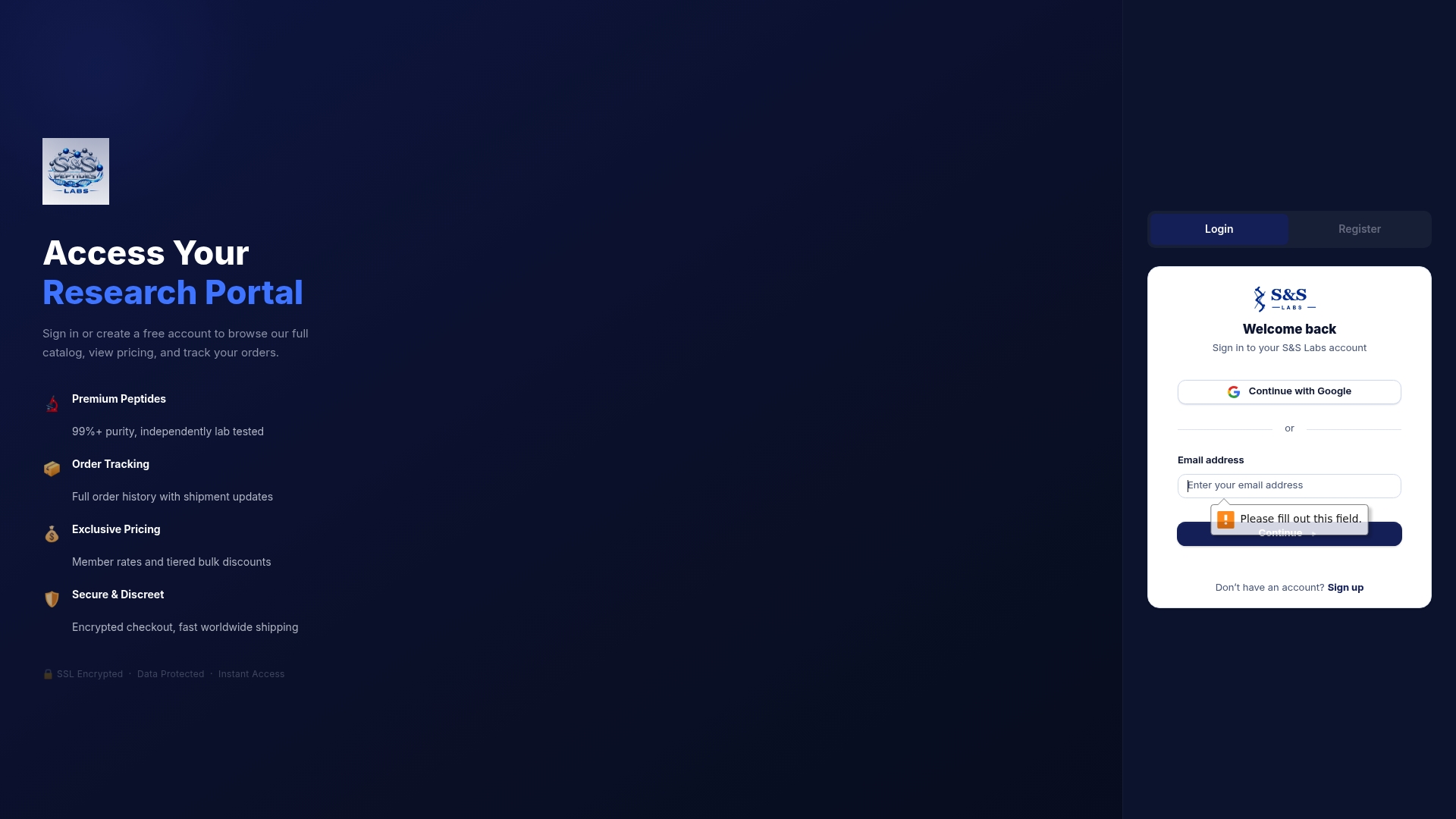
Sslabsresearch offers tiered bulk pricing for members, making it practical for both individual researchers and larger organizations managing ongoing procurement. Secure transactions and discreet fulfillment are standard. For researchers who want verified quality without the guesswork of evaluating unknown vendors, the Sslabsresearch storefront is the direct path to research-grade materials backed by real documentation.
FAQ
What makes a research chemical supply review credible?
A credible review references specific documentation details, such as batch-specific COAs and independent lab results, rather than general satisfaction. Reviews that include analytical data or describe purity outcomes across multiple orders carry the most weight.
How do I know if a supplier's COA is batch-specific?
A batch-specific COA includes a unique lot number that matches your shipment, along with raw HPLC chromatogram data and mass spectrometry results. Generic COAs lack lot-matchable identifiers and cannot verify the actual compound you received.
Is buying research chemicals online from domestic suppliers worth the higher cost?
Domestic suppliers typically cost 20%–30% more per unit but deliver in 3–5 business days with no customs risk. For time-sensitive research or temperature-sensitive compounds, that reliability premium is worth the price difference.
What purity level should I require from a research chemical vendor?
Top-tier vendors achieve average purity scores of 9.6/10, with every batch meeting or exceeding label claims. Any supplier advertising 99% purity should be able to provide batch-specific lab data confirming that figure before you order.
How do I spot fake or unreliable vendor reviews?
Reliable reviews include specific compound names, batch references, or analytical details. Reviews that focus only on price, packaging, or shipping speed without mentioning documentation quality are not useful for evaluating research chemical vendors.